

Keeping resilient and promoting wellbeing
It is important that we help support children and young people to understand their feelings and find ways to keep emotionally healthy and well. These pages offer information, learning and ideas, helping to keep both you and your family emotionally healthy and well.
Here is some useful information and advice to support parents and families:
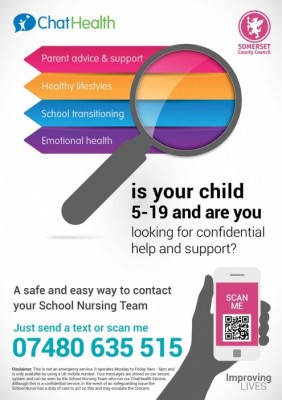
ChatHealth

Public Health have developed THIS QUICK GUIDE for young people and families, providing national and Somerset wide signposting to support and self-help resources.
Please share with families and young people - Mental health and wellbeing help for young people Sept 2025.pdf
Looking After Yourself - Looking After Others
Five Ways to Wellbeing
The Five Ways to Wellbeing are a set of evidence-based actions which promote people’s wellbeing. They are: Connect, Be Active, Take Notice, Keep Learning and Give. These activities are simple things individuals can do in their everyday lives.
Connect
Connecting is about building relationships, both old and new. Strong relationships with other people help you feel good and provide a sense of belonging. Being part of a strong social network helps to keep you healthy.
Connect…with the people around you, with family, friends, colleagues and neighbours.
Connect with people at home, work, school or in your local community. Think of the relationships you have with these people as the foundations of your life. Invest time in developing them. Building these connections will help support and enrich you every day.
Be active
Be active…Go for a walk or run. Step outside. Cycle. Play a game. Garden. Dance. Exercising makes you feel good. Most importantly, discover a physical activity you enjoy and that suits your level of mobility and fitness.
Getting active is great for your mental wellbeing, as well as your physical health. It can help avoid negative thinking, increase your confidence, reduce your stress levels and boost your mood.
Take notice
Be curious. Catch sight of the beautiful. Remark on the unusual. Notice the changing seasons and birdsong. Savour the moment, whether you are walking to work, eating lunch or talking to friends. Be aware of the world around you and what you are feeling. Reflecting on your experiences will help you appreciate what matters to you.
Taking notice of what is around you – and of what you are thinking and feeling – can help you feel in control, and reduce feelings of stress and anxiety.
Keep Learning
Try something new. Rediscover an old interest. Sign up for that course. Take on a different responsibility at work. Fix a bike. Learn to cook your favourite food. Set a challenge you will enjoy achieving not one that is a chore. Learning new things will make you more confident as well as being fun.
Learning something new can help you increase your self-confidence, feel good and improve your ability to cope with everyday problems. And as you learn you’ll probably notice you’re enjoying life a little bit more too.
Give
Participation in social and community life has attracted a lot of attention in the field of wellbeing research.
Individuals who report a greater interest in helping others are more likely to rate themselves as happy.
Research into actions for promoting happiness has shown that committing an act of kindness once a week over a six-week period is associated with an increase in wellbeing. www.mind.org.uk/workplace/mental-health-at-work/taking-care-of-yourself/five-ways-to-wellbeing/
Watch the 5 Steps to Wellbeing Animation
We've included below support for family wellbeing
Looking after your mental health
Having good mental health helps us relax more, achieve more and enjoy our lives more. We have expert advice and practical tips to help you look after your mental health and wellbeing.
www.nhs.uk/oneyou/every-mind-matters/
Would you like to talk with a professional about your mental health?
Wherever you live in England you can refer yourself to your local Talking Therapies Team.

Get Psychological First Aid training to support children and young people’s mental health during emergencies and crisis situations.
The course is available for all frontline workers such as teachers, health and social care workers, charity and community volunteers and anyone who cares for or is regularly in contact with children and young people aged up to 25, including parents and caregivers.
It is free, takes about three hours to complete (split into three sessions that the learner can complete at their own pace) and no previous qualifications are required.
www.futurelearn.com/courses/psychological-first-aid-for-children-and-young-people
Real stories
Real Stories On Mental Health From Young People | YoungMinds

Safe and reliable advice about young people’s mental health, created by experts and parents together.

