

Getting Outdoors!
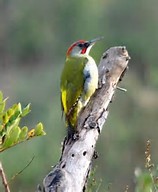
Being exposed to fresh air supports sleep, builds immunity, and creates a healthy lifestyle approach
Getting outdoors and being with nature supports children to feel grounded. It helps us all to feel calm and builds confidence with regulating emotions whilst also supporting balancing of the senses. Being outside helps children develop language, reasoning, and observation skills.
The more children spend time outside in nature, the more they can develop respect towards their environment and in turn can support them in learning how to build positive human relationships. Outdoors, children learn how to observe and take risks.
Whenever you see this symbol  there is a linked website article for more information
 Click HERE for a printable version of this page - Outdoor Activities
-------------------------------------------------------------------------------------------------------------------------------
Here you will find a range of activities and ideas for outdoor activities
After each activity consider the following questions…
- Which part of the activity did your child take most interest in?
- What was it they enjoyed?
- When did your child talk/giggle/smile the most?
- Why do you think that was?
- When did you feel you and your child were most connected?
- What supported that special connection?
- Were there any activities which didn’t work so well?
- What could have been better?
Try using these sentence starters to encourage conversation and engagement together as well as with the environment around you…
- Wow! That looks really interesting, tell me more about your…(sculpture/ collection/ colour choices etc)
- I wonder what would happen if we tried to…
- What would you like to do next?
-
How does it make you feel when you touch the bark/pavement/bushes etc?
----------------------------------------------------------------------------------------------------------------------------------
Nature Hunt
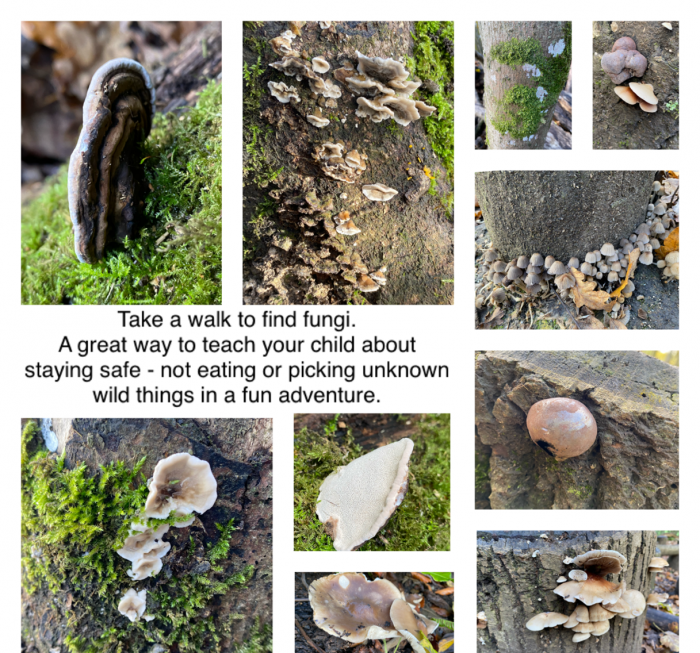

You can find one type of natural object to look out for or spend time collecting lots of natural objects to make your very own crown using some double backed sticky tape on a piece of wallpaper sample or card.

You can also take an empty matchbox or takeaway tub and see how many different pieces of fallen nature you can fit inside during your walk
@Lauraradniecki
----------------------------------------------------------------------------------------------------------------------------------
Shape Hunt
Going on a shape hunt is a great way to teach or reinforce your child’s knowledge of shapes whilst having fun exploring out and about. Shapes can be found everywhere!
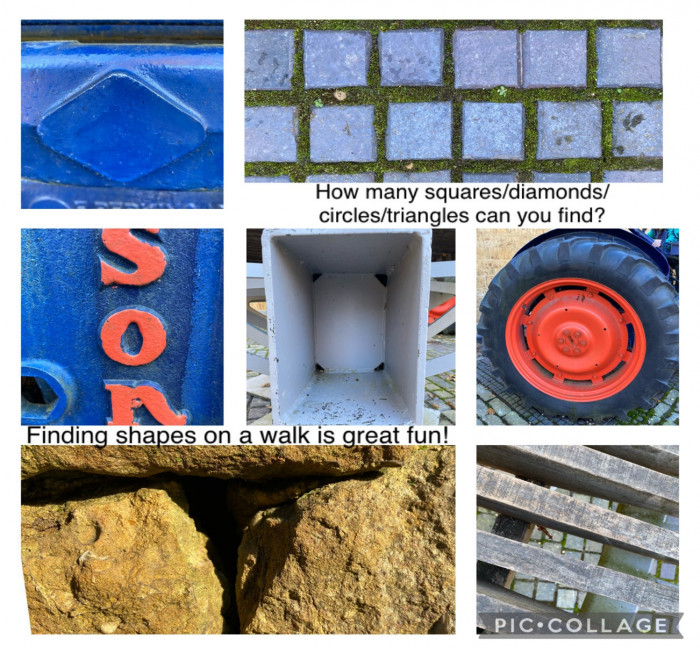
Image: Lucy Pearse
Encourage your child to look high and low when walking through the town, park or woods.
Whilst looking for things, children are less likely to want to annoy siblings as they will be busy trying to complete their challenge.
Be mindful of how much competition your child can manage. If your child finds competition upsetting or frustrating, adapt the game so you are working as a team to see how many of a certain shape you can find.
You can work again as a team next time to try and beat your last score - the goal belongs to everyone equally.
----------------------------------------------------------------------------------------------------------------------------------
Number Hunt!
Finding numbers along your walk is great fun!

Image: Lucy Pearse
You can challenge older children to find a larger/smaller number than the one they just found, or even find numbers in a times table they are learning. This will support them finding fun in learning.
You can have a team challenge to see who finds the most number ‘4s’ on a walk or each have a different number and see who finds the most. Giving your child a camera to take photos of the numbers they find can also make a great collage at the end of the walk.
Have fun making up your own number challenge ideas!
----------------------------------------------------------------------------------------------------------------------------------
Nature Paintbrushes
You can use any brushes or items from your home to mark make with!
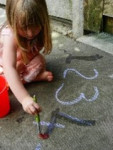
Using water to paint with outside on walls or on the floor is really magical for children as they watch their art work grow and then disappear before their eyes! You can add a little water based paint to make colourful water to paint with too.
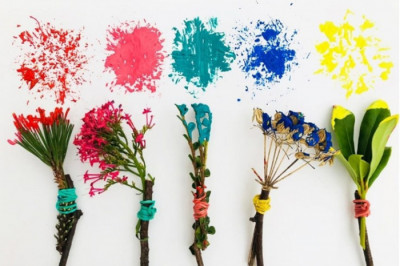
Try making your own paintbrushes with sticks, string and leaves/grass etc – again, you can use paint or just plain water – children love to paint with water and it leaves no mess!
@MasandPas
Here are some items around the home you could use for painting outdoors
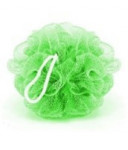
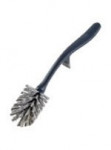
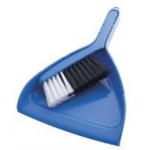
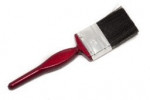

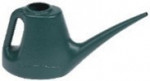
Painting with watering cans or water squirters outside is also great fun and you can even practice writing letters or making wiggly/spiky marks or pictures with children using this method.

@Wormseyeview
This blog post has lots more ideas on mark making outdoors OUTDOOR MARK MAKING. NUMBERS, LETTERS AND MATHEMATICAL CONCEPTS. - Worms Eye View (wormseyeview1.co.uk)
----------------------------------------------------------------------------------------------------------------------------------
Guess My Tree
Find an area where there are 4 or more trees (there are often trees near parks or in town centre landscaped areas).
Take it in turns to be blindfolded whilst a trusted person leads you to a tree.
Have a good feel of the textures, shapes and patterns (the leader can help you find interesting knots in the tree trunk/roots to feel to help you out).
You will then be lead away from the tree and the blindfold taken off.
You then go back and see if you can find your mystery tree based on what you felt when blindfolded!

Getty Images
---------------------------------------------------------------------------------------------------------------------------------
Colour Wheel Challenge
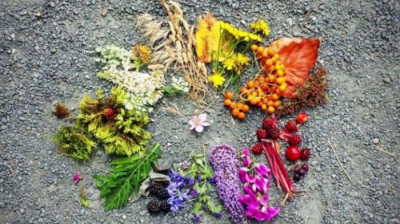
Can you find something on your walk to match each colour on a colour wheel?
Cutting up paint tester strips can easily make a colour matching wheel/card – or you could colour your own wheel outside in nature itself.

@KiddyCharts @JacquelineLarocque
----------------------------------------------------------------------------------------------------------------------------------
Find me a texture
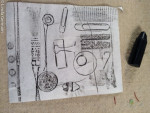
You can do this around the home or outdoors – see what shapes and patterns you can make using a wax crayon rubbed over the paper to reveal the textures and shapes underneath.
You can then cut the shapes out to make a collage or turn your rubbings into an animal shape or treasure map!

@LindaGermain @JoanneGonzalez
----------------------------------------------------------------------------------------------------------------------------------
Through My Lense
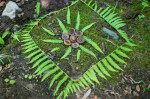
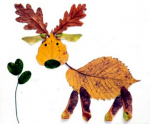
Finding a space outside either at the beach or in a woodland is a great way to make sculptures – use the time to talk about the colours, textures, weights and sizes of things you are collecting – this will encourage conversation with your child and build their vocabulary.
 @Curbly
You can also cut out your child’s favourite animal in a piece of paper and then ask them to take their animal for a walk – how many different coloured outfits will their animal wear along the way?
Where will they be best camouflaged?
Everyone on the walk takes a frame with them – as they are walking, when they spot something interesting, they frame it in their cardboard frame and call out “freeze frame” and everyone comes and looks to admire the captured view.
You can also try and guess which part of the freeze frame the person found most interesting for an added challenge and point to talk about. If you don’t have cardboard you can use your fingers – as shown below.


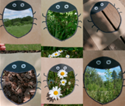
You can also take a cardboard frame out with you and settle on a patch of grass and ask your child/ren to go and find things from around them to make their own piece of artwork in your outdoor art gallery!
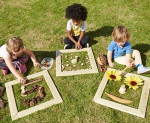
@TTS : 12 outdoor activity ideas can be found here
--------------------------------------------------------------------------------------------------------------------------------
Games for in the Car
20 Questions
One person choses something to think of from one of the following 3 categories – A place, A thing or A person.
That person tells the group only which category they have chosen and then the rest of the group take it in turns to ask a question which can have a yes or no answer to try and guess what the person is thinking.

Are you found in a home? Yes
Are you used every day? Yes
Are you a piece of cutlery? Yes
Do you have a scoop? Yes
Are you a spoon? Yes!
“I spy”
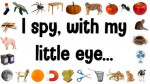
Take it in turns to name a colour or letter of something you can see. The other players take it in turns to guess what you have spotted. e.g. I spy with my little eye, something the colour green. Is it a.. tree? No, a bush? No, that barn? Yes!
Spot the…
See how many different car makes you can spot on your journey
 You can also play spot 10 Ford/Citroen cars, 10 vans etc.
You can play other variations either working as a team or individually in competition with each other.
- Spot 10 cars which are black/green/red/grey etc.
- Spot a car from each colour of the rainbow – you can spot them in the order of the rainbow for an extra challenge!
- Spot a car/a series of car number plate(s) which make a number bond to 10/20/100 depending on your child’s maths ability.
E.g. TD14 number plate = a bond to 5 as 1 + 4 = 5.
Click HERE for a printable version of this page - Outdoor Activities
With thanks to Somerset Educational Psychology Service (EPS) for their work with us in developing this resource page

